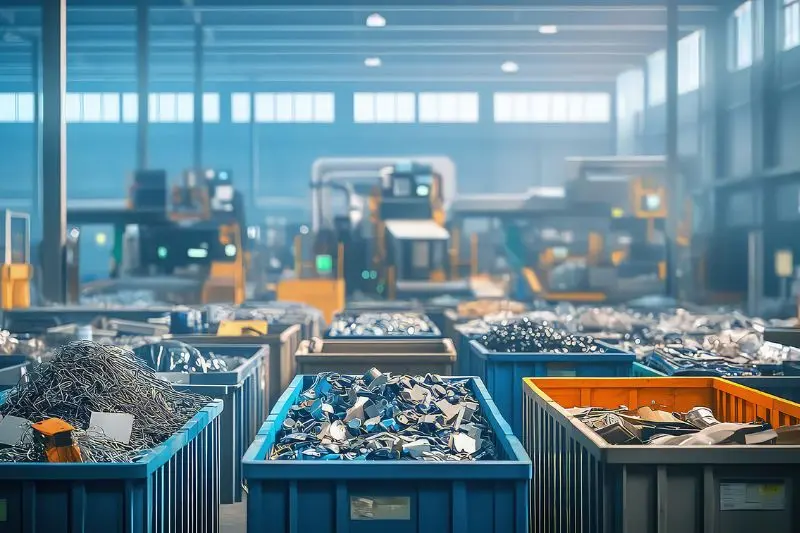


The defence sector is one of the world’s largest consumers of natural resources and energy. At first glance, reconciling operational requirements with the green transition may seem like an impossible mission. Yet this transformation is now extending to the military sector, bringing both paradoxes and opportunities. Plastics and composite materials, essential to equipment performance and lightweighting, lie at the heart of this dilemma. While they have enabled major innovations, they now face a new challenge: achieving greater sustainability and recyclability without compromising strategic requirements.
Balancing military performance and environmental responsibility
In a context where every kilogram of weight saved on a military vehicle translates into fuel savings and improved mobility, advanced plastics and composite materials represent a major asset. Essential to modern armed forces, carbon and glass fibres combined with polymer matrices provide exceptional lightweighting and mechanical performance, reducing the weight of armoured vehicles, aircraft and personal equipment. High-performance polymers such as PEEK and PPS can withstand extreme environments, helping ensure system reliability and longevity.
However, these technological advances face a significant challenge: end-of-life management. Thermoset composites, valued for their robustness, remain difficult to recycle because of their cross-linked structure and heterogeneous composition.¹ While recyclable thermoplastic composites are emerging, their use remains limited in the military sector.
This paradox—materials that are lightweight and high-performing, yet difficult to recycle—illustrates the complexity of reconciling innovation, energy efficiency and the green transition. It also highlights the need to explore strategies for making the defence sector more sustainable over the long term.

Towards more sustainable materials for defence
Natural-fibre composites: still limited, but promising potential
In response to environmental challenges, researchers are exploring alternatives to conventional synthetic composites, particularly natural fibres such as flax, hemp, jute, kenaf, curaua and coconut fibre combined with polymer matrices. Made from renewable resources, these biocomposites stand out for their light weight, lower cost, availability and significantly smaller carbon footprint compared with fossil-based materials. At the end of their service life, they are also easier to recycle and degrade more readily than synthetic fibres such as Kevlar or aramid fibres.
Plant-fibre composites can meet, and in some cases even exceed, certain ballistic performance requirements for personal or structural protection. Two main approaches are being explored: composites made entirely from natural fibres and hybrid composites combining natural and synthetic fibres. The latter provide enhanced performance, particularly in terms of ballistic limit and energy dissipation, paving the way for solutions that combine performance and sustainability. Fibre orientation, layer configuration and the quality of polymer impregnation remain key parameters for optimizing these properties.²˒³
Some technical limitations remain, including the hydrophilic nature of lignocellulosic fibres, which reduces their compatibility with hydrophobic polymers and increases their sensitivity to moisture. Physical or chemical treatments—including alkaline, silane and enzymatic treatments—can improve fibre–matrix adhesion, reduce water absorption and stabilize mechanical performance.
For now, military adoption remains largely limited to non-critical portable equipment, such as helmets and lightweight protective gear, as well as temporary infrastructure. Over time, greater use of natural fibres could reduce dependence on synthetic fibres and help move the defence industry towards a more circular economy.⁴
Advanced composite recycling: turning a constraint into an opportunity
Recovering value from end-of-life composites is a major challenge, particularly for carbon fibres used in armour, aerospace structures and onboard systems. Microwave-assisted pyrolysis is emerging as a promising approach, enabling the recovery of fibres and polymer matrices while limiting morphological degradation of the fibres. The recovered fibres also exhibit improved adhesion to epoxy resins due to an increase in oxygen-containing functional groups.⁵
Although recycled composites experience some loss of mechanical performance—up to 24% in impact strength, 16% in tensile strength and 8% in flexural strength—they can still be reused in less critical or hybrid applications. International research, from Japan and the United Kingdom to Canada, is focused on optimizing these processes to improve the durability, microstructure and chemical properties of recovered fibres.⁵

“In the composites sector, material recycling represents a major challenge, particularly because of the high cost of carbon fibre. We have explored the possibility of recovering carbon fibre for reuse in the manufacturing of new products. The objective is to determine how these fibres can be effectively recycled to produce high-performance structural composite parts for defence applications and other sectors,” says Valerio Izquierdo, Vice-President, Business Development and Partnerships at Groupe CTT.
A concrete Quebec example: Soucy Defense composite rubber tracks
Soucy Defense develops composite rubber tracks (CRTs) for armoured vehicles, combining light weight, durability and versatility. Their reduced weight can improve fuel efficiency by up to 30%, lowering both fuel consumption and emissions. Quieter and generating less vibration, CRTs also enhance tactical stealth, extend the service life of electronic systems and reduce crew fatigue.
These benefits translate into a smaller logistical footprint: fewer spare parts, less maintenance and greater operational range. By integrating CRTs into existing and future platforms, armed forces can improve agility and endurance while reducing life-cycle costs and contributing to sustainability objectives.⁶
Hybrid-electric armoured vehicles and advanced composites: the GXV-T program
The U.S. Defense Advanced Research Projects Agency (DARPA) developed the Ground X-Vehicle Technologies (GXV-T) program to explore lighter, more agile and less detectable armoured vehicles. Rather than increasing armour at the expense of prohibitive weight and cost, GXV-T explored advanced composites to reduce vehicle weight by 50%, hybrid-electric propulsion for greater energy efficiency, and radical mobility technologies designed to provide access to 95% of terrain. The objective was to simultaneously enhance survivability and mobility while reducing detectable signatures.⁷

By combining lightweight structures, more environmentally sustainable propulsion and enhanced operational capabilities, GXV-T illustrates how the defence sector can address both tactical requirements and the green transition.
Barriers to the adoption of sustainable materials
While bio-based composites offer promising opportunities, several barriers remain. Performance is still a key consideration: under extreme conditions, these materials do not always meet the required levels of impact resistance, durability and thermal stability. This technical gap currently limits their use to non-critical equipment or less demanding environments.
From an economic perspective, the production and recycling of biocomposites remain more costly than those of conventional materials. In a sector where cost-effectiveness plays a major role in decision-making, this difference can hinder adoption. Finally, stringent military standards and protocols require extensive mechanical, environmental and safety testing before materials can be approved, slowing the sector’s green transition.
Research and innovation opportunities for greener defence
Research is exploring solutions that combine performance and sustainability, including:
• hybrid materials combining natural and synthetic fibres in recyclable matrices;
• self-healing composites capable of recovering from minor damage;
• 3D printing of composites, enabling the production of complex parts with less waste and greater customization.
“3D printing reduces the environmental footprint of the defence sector by optimizing material use and minimizing waste. By adding only the amount of material required, it reduces waste compared with traditional subtractive manufacturing methods. It also facilitates equipment repair, extending service life and reducing the use of natural resources,” says François Guilbault, President of Solaxis Ingenious Manufacturing.
By Fanny Charreteur
(1) https://www.sciencedirect.com/science/article/abs/pii/S1359835X05002101
(2) https://www.tandfonline.com/doi/abs/10.1080/15440478.2020.1787919
(3) https://www.mdpi.com/2073-4360/13/4/646
(4) https://www.sciencedirect.com/science/article/pii/S2590123023003985
(5) https://pmc.ncbi.nlm.nih.gov/articles/PMC11126046/
(6) https://soucy-defense.com/the-role-of-composite- rubber-tracks-in-modern-defence/
(7) https://www.darpa.mil/research/programs/ ground-x-vehicle-technologies
This article has not undergone thorough linguistic review. It may therefore contain some spelling and syntax errors. Rest assured that the nature of the content and information presented is not affected.