
Waste represents a major challenge for both the environment and public health. Effective waste management is essential to minimize its impacts, which can be severe, including soil and water contamination, greenhouse gas emissions, and biodiversity loss. Plastics, in particular, pose a significant environmental challenge due to their persistence in the environment and the inefficiencies associated with their end-of-life management. According to the OECD, global plastic production reached 460 million tonnes in 2019, yet only 9% of plastic waste was recycled.¹ This linear production model—produce, consume, dispose—results in substantial resource waste and increasing environmental pollution.
In response to these challenges, Extended Producer Responsibility (EPR) has emerged as a key policy instrument for promoting sustainability, reducing waste, and encouraging producers to design products with lower environmental impacts. Under EPR, producers are responsible for managing the waste generated by their products at the end of their life cycle, thereby promoting practices such as recycling, reuse, and waste reduction at the source.
But how is Extended Producer Responsibility (EPR) implemented around the world, and more specifically in Québec? What innovations have emerged from these practices? And what challenges do producers face as they transition toward a circular economy?
Extended Producer Responsibility (EPR) Systems Worldwide: Diverse Models and Effective Approaches
Extended Producer Responsibility (EPR) systems share the same fundamental objective worldwide, but their implementation is tailored to the specific regulatory, economic, and social contexts of each country. While approaches vary, they have generally delivered positive environmental outcomes.
For example, Switzerland relies on producer-funded financial contributions to cover recycling costs, supported by a highly efficient collection network. This model has enabled the country to achieve high recycling rates, largely due to the quality and effectiveness of its collection system.
In South Korea, incentives encourage producers to design products that are easier to recycle, complemented by clear product labeling. This helps consumers better understand recycling requirements, improving waste sorting and recycling performance.
Slovenia has adopted a preventive approach by adjusting producer fees according to the amount of waste generated. This eco-modulation system encourages waste reduction at the product design stage, leading to a significant decrease in waste generation.
In Austria, a combination of regulated competition and eco-modulated fees holds producers accountable for the environmental impacts of their products. This approach optimizes recycling through well-designed incentives and penalties, demonstrating that regulated competition can improve both environmental and economic performance.
Japan enforces strict legislation and rigorous oversight to ensure high levels of compliance. Regular evaluations enable continuous improvements in recycling practices and overall sustainability performance.
Finally, in Norway, close collaboration between producers and Producer Responsibility Organizations (PROs) ensures a fair allocation of responsibilities. This cooperative model supports efficient waste management and contributes to consistently high collection and recycling rates.²
Several organizations also play a pivotal role in advancing EPR systems. In the United States, the Product Stewardship Institute (PSI) promotes responsible product management throughout the entire product life cycle and has helped establish EPR programs for more than 20 product categories. In Europe, the Extended Producer Responsibility Organisation (EPRO) supports plastics circularity by improving collection and recycling systems, particularly for agricultural plastics, with participation from nearly 20 countries.

Circular Plastics in Québec: A Collaborative Strategy for Recycling and Resource Recovery
Québec has implemented a 2024–2029 Strategy for the Reduction and Management of Plastics, with a strong focus on reducing plastic use, increasing resource recovery, improving recycling, and advancing the circular economy.¹ Several organizations play a central role in achieving these objectives, including RECYC-QUÉBEC, Éco Entreprises Québec (ÉEQ), and AgriRÉCUP.
RECYC-QUÉBEC is committed to reducing waste and promoting the sustainable management of resources through initiatives aimed at improving recycling systems and encouraging responsible consumption.
Éco Entreprises Québec (ÉEQ) supports the eco-design of packaging, helping companies reduce environmental impacts at the product design stage. The organization also represents producers in fulfilling their EPR obligations, including the management of packaging waste and the financing of municipal curbside recycling services.
AgriRÉCUP, meanwhile, focuses on agricultural plastics by supporting and advancing collection and recycling programs across the province, helping divert these materials from disposal and reintegrate them into the circular economy.
Extended Producer Responsibility (EPR) as a Driver of Innovation in Plastic Recycling: COALIA Paving the Way for Circular Solutions
Extended Producer Responsibility (EPR) is also driving innovation by accelerating the development of more recyclable materials and circular solutions. According to Audrey Diouf Lewis, Project Manager at COALIA, the Centre for College Technology Transfer (CCTT) has been actively involved in plastic recycling for several years. Through applied research projects conducted in collaboration with industry partners, material recovery facilities, and organizations such as AgriRÉCUP, COALIA is helping develop innovative solutions that improve plastic recovery and support the transition to a circular economy.
Recycling Plastic Waste and Agricultural Films
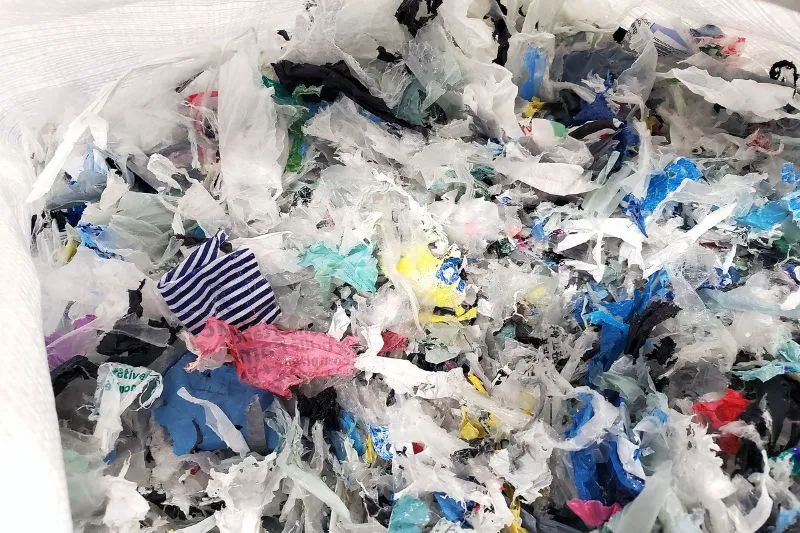
Plastic recycling presents several challenges, primarily due to the wide variety of plastic resins and the presence of contaminants. COALIA’s research team has investigated the feasibility of recycling both post-consumer plastic waste and agricultural plastic films.
Using a mechanical recycling process inspired by the one commonly used for plastic bottles, the team successfully converted these waste streams into recycled plastic pellets. Their analyses revealed that the films consist primarily of polyethylene (PE) but also contain contaminants such as paper, metal, and other plastic materials.
Despite these contamination challenges, the recycled pellets retained good physical and mechanical properties. However, their level of purity remains insufficient for high-performance applications such as plastic film production. They show greater potential for less demanding applications, including irrigation tubing, where the material performance requirements are more compatible with the properties of the recycled resin.
COALIA continues to explore these opportunities and is also investigating the possibility of blending recycled films from both post-consumer and agricultural sources to develop materials that better meet industrial performance requirements.

“To address the challenges of plastic recycling, Québec must strengthen collaboration between industry and research organizations to turn these obstacles into opportunities and enhance the effectiveness of the circular economy,” says Audrey Diouf Lewis.
By Fanny Charreteur
This article has not undergone thorough linguistic review. It may therefore contain some spelling and syntax errors. Rest assured that the nature of the content and information presented is not affected.

