
In an industrial landscape that is constantly evolving, manufacturers in the plastics and composites industry—including mold makers—face a critical challenge: how can they remain competitive in the face of globalization and rapid technological advances?
Automation and robotics are often perceived as complex, costly solutions reserved for large corporations. However, this perception is frequently rooted in misconceptions and outdated assumptions. It is time to challenge these beliefs and explore the tremendous potential these technologies offer to support the long-term sustainability, productivity, and growth of your operations.
But have you truly asked yourself the right questions?
Why Automation and Robotics?
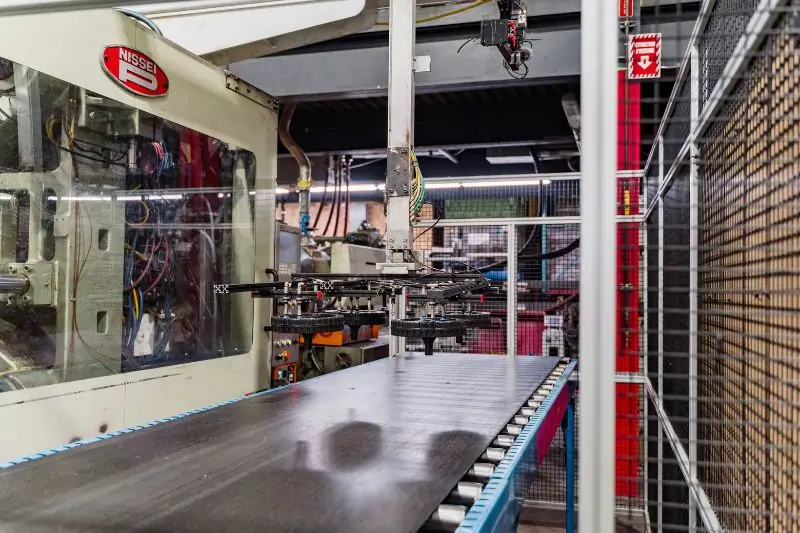
Automated systems and industrial robots are far more than just a technological trend. They have become key drivers of productivity and efficiency in modern manufacturing. For plastics and composites manufacturers—including mold makers—automation offers tangible benefits such as:
- Reduced production costs: Faster and more precise manufacturing processes help reduce material waste and optimize the use of resources.
- Improved quality: Robots and automated systems enable consistent and accurate quality control, minimizing human error and production defects.
- Greater flexibility: Modern automation systems are highly adaptable and can be programmed to perform a wide range of tasks, allowing manufacturers to quickly adjust to changing market demands.
Breaking Down Common Misconceptions
Many misconceptions about automation and robotics still persist, including the belief that these technologies are complex, expensive, and only suitable for large companies. Here are some of the most common myths—and the realities behind them:
- “It’s too expensive for my company.”
In reality, the initial costs of automation have decreased significantly over the years. Moreover, the return on investment (ROI) is often achieved quickly through increased productivity, reduced waste, and lower costs associated with manufacturing errors and defects. - “We don’t have the expertise to manage these technologies.”
Today’s automation solutions are designed to be user-friendly and accessible. A wide range of training programs, technical support services, and implementation resources are available to help companies successfully integrate these technologies into their operations. - “Automation will replace our employees.”
Contrary to this widespread belief, automation is intended to enhance employees’ capabilities rather than replace them. Repetitive, physically demanding tasks can be automated, allowing workers to focus on more complex, higher-value activities that require judgment, creativity, and problem-solving skills. - “Our company can’t automate because we produce small batches and it’s not practical to reprogram machines so often.”
This perception no longer reflects today’s reality. Automation and robotics technologies have evolved to become far more flexible and adaptable, even for high-mix, low-volume production environments. Modern solutions, including collaborative robots (“cobots”) and intuitive programming platforms, enable rapid changeovers and efficient reprogramming, often without requiring advanced technical expertise. These innovations allow manufacturers to handle shorter production runs and respond quickly to changing customer demands while maintaining productivity and competitiveness.
Have You Asked the Right Questions?
To determine whether your company is ready to take the next step toward automation and robotics, it is essential to ask the right questions:
- Which processes in my facility are the most repetitive and prone to errors?
Identifying these tasks is the first step in understanding where automation can deliver the greatest value. - What is my current production capacity, and what are my future growth objectives?
Understanding your long-term goals will help determine whether automation is the right solution to support sustainable and efficient growth. - What are the costs of poor quality within my operations?
How much do scrap, rework, downtime, and production errors really cost your business? Automation can help reduce these costs by improving process consistency, accuracy, and reliability.
An Economic Opportunity You Can’t Afford to Ignore
Global markets are becoming increasingly competitive, and manufacturers that fail to embrace automation risk losing their edge to more agile and efficient competitors. For plastics and composites manufacturers, the integration of robotic and automated systems can not only increase productivity but also unlock new opportunities in demanding sectors such as automotive, aerospace, and construction.
How to Get Started with Automation
The transition to automation does not need to be sudden or disruptive. In many cases, the most effective approach is to begin with pilot projects or small-scale implementations to evaluate how the technology fits within your specific operations.
Working with automation experts and technology providers can also help you develop a tailored strategy that aligns with your business objectives, production requirements, and available resources.
By asking the right questions and exploring the possibilities offered by automation and robotics, you can position your company to seize new growth opportunities. Don’t let outdated assumptions prevent you from benefiting from the significant advantages these technologies can provide.
The question is no longer whether you should embrace automation—it is how and when. The sooner you begin, the better prepared your business will be for a more productive, competitive, and sustainable future.
By Simon Chrétien
This article has not undergone thorough linguistic review. It may therefore contain some spelling and syntax errors. Rest assured that the nature of the content and information presented is not affected.

