

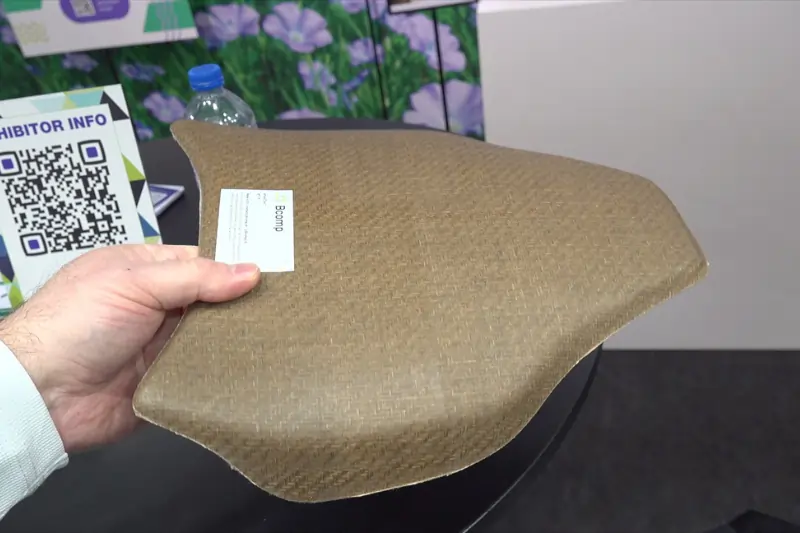
Composed of two materials with complementary mechanical properties, a matrix and a reinforcement, composites are highly sought after in sectors such as construction, energy, transportation, and telecommunications. These materials stand out for their performance, particularly in terms of high strength and light weight. However, while common practice relies on synthetic fibers such as glass or carbon fibers, these reinforcements have a negative environmental impact.
Natural fibers: an alternative?
Natural fibers, characterized by their recyclability and biodegradability, are emerging as an ecological and sustainable alternative to traditional reinforcement materials. For example, producing natural fibers requires five times less energy than glass fiber and 25 times less than carbon fiber (1). Another significant figure: producing plant-fiber-based composites for cars emits up to 85% less CO₂ than when carbon fibers are used.
Beyond environmental benefits, these fibers are also notable for their availability and relatively stable, low cost. According to one study (2), by 2025, the global market for natural fiber composites is expected to reach USD 10.89 billion, with an annual growth rate of 8.8%.
Hemp, flax, wood, milkweed silk, cotton, jute, kenaf, ramie, abaca, and sisal—North America dominates the market for natural fiber composites. Combined with polymer matrices such as polypropylene (PP), polyethylene (PE), or polylactic acid (PLA), these materials, also known as biocomposites, are recognized for their rigidity, strength, lightness, thermal insulation properties, and durability, while remaining biodegradable.
In a context where balancing climate challenges and product performance is essential, these composites represent the future. But are we ready to use them on a large scale? Many industrial examples already integrate natural fibers into sustainable composites, and research is making significant progress toward achieving performance levels comparable to carbon or glass fibers.
Innovation for a green economy
Natural fibers are biological materials, meaning their quality can vary depending on factors such as climate. In addition, several challenges remain in composite manufacturing. On one hand, the natural fiber must be compatible with the polymer. On the other hand, processing methods—such as extrusion, injection molding, and compression molding—typically occur at temperatures between 180°C and 220°C, creating a real risk of fiber degradation. For example, hemp fibers begin to deteriorate at 160°C.
So, what is the solution? Adapting processing methods to the properties of plant fibers. In this context, COALIA, in collaboration with the Université de Sherbrooke, the Centre de recherche sur les systèmes polymères et composites à haute performance (CREPEC), the Centre québécois sur les matériaux fonctionnels (CQMF), and Université Laval, developed a process that includes a flax fiber pretreatment step followed by plasma treatment. This approach preserves fiber integrity while significantly improving surface characteristics, adhesion potential, and the mechanical and thermal properties of the composite.
This innovation represents a major advancement in sustainable composite materials and opens the door to numerous applications.
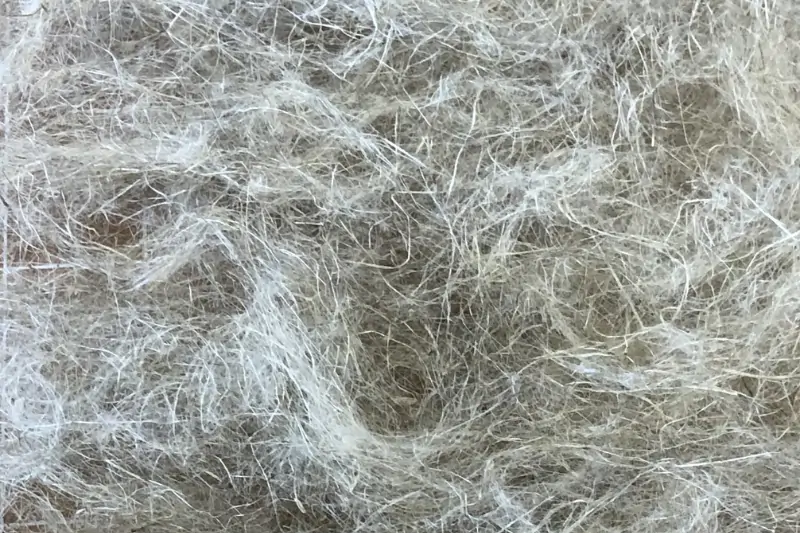
Applications across multiple sectors
Road transportation
Due to their properties, biocomposites can be used in the automotive sector, particularly for interior and body components. Manufacturers use abaca, flax, and hemp fibers to produce molded thermoplastic panels for door trims, dashboard components, rear shelves, seatbacks, headrests, and engine covers.
Truck cabins are also made from cotton fiber/phenolic resin materials to reduce weight. This not only lowers vehicle mass but also improves vibration absorption for greater comfort, reduces carbon footprint, and enhances energy efficiency.
Aerospace
Flax-based composites are used in the aerospace industry, particularly for structural components in aircraft, helicopters, and satellites.
Consumer goods
Bicycle parts, surfboards, tennis rackets, golf clubs, protective equipment, skis, and more—natural fiber composites have proven their value. For example, the Quebec company Ferreol has gained international recognition by replacing carbon and glass fibers with flax fiber to manufacture skis.
Construction
Wool- or hemp-based composite materials are used in construction for thermal insulation panels. These biocomposites are fire-resistant and help regulate moisture in walls and wood. They are also used for façades, flooring, and lightweight structures.
Interest in natural fiber composites continues to grow due to their performance and lower environmental impact compared to synthetic fibers. Canada remains a major global player in flax fiber production. In Quebec, initiatives such as hemp cultivation in the Lanaudière region are emerging. These developments offer advantages in terms of raw material supply, transportation costs, and greenhouse gas emissions.
According to Mostafa Chamouni, Project Manager for the Plastics Sector at COALIA:
“With Canada having both natural fiber resources and research teams dedicated to sustainable development, biocomposites are undoubtedly materials of the future.”
By Fanny Charreteur
This article has not undergone thorough linguistic review. It may therefore contain some spelling and syntax errors. Rest assured that the nature of the content and information presented is not affected.

