

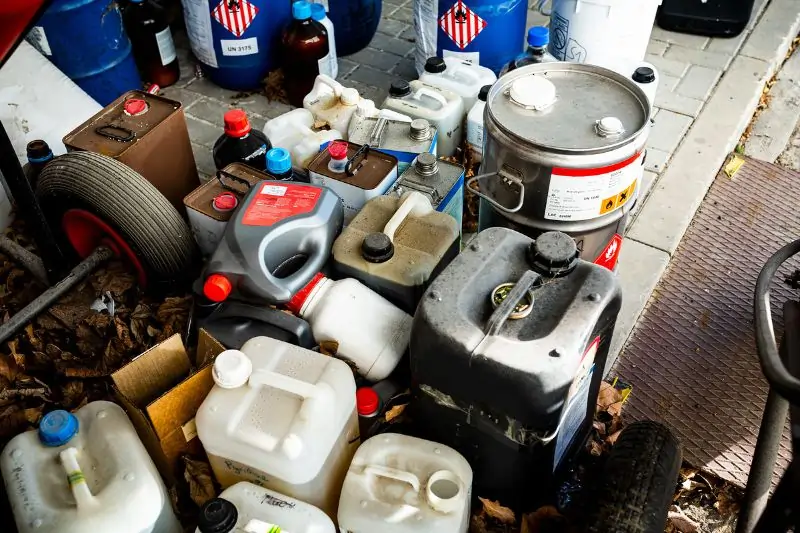
Composite materials are widely used across many industries due to their numerous advantages. However, their manufacturing not only involves the use of hazardous substances, but also relies on processing operations (polymerization, cutting, lamination, machining, etc.) that release potentially toxic volatile compounds (vapors, gases, dust). In this context, waste generated from the synthesis or processing of composite materials is classified according to its level of hazard and is subject to strict regulations established by the ministère de l’Environnement, de la Lutte contre les changements climatiques, de la Faune et des Parcs (MELCCFP)
What materials are considered hazardous in the composites sector?
First, what is meant by “hazardous materials or waste”? Article 1 of the Environment Quality Act (EQA) defines a hazardous material as follows: “any material that, due to its properties, poses a danger to health or the environment and that is, within the meaning of the regulations adopted under this Act, explosive, gaseous, flammable, toxic, radioactive, corrosive, oxidizing or leachable, as well as any material or object considered as such under the regulations.” (1)
In the case of composite materials, any waste exhibiting these characteristics is considered hazardous:
- Oxidizing materials: catalysts (organic peroxides);
- Flammable materials: liquid resins, acetone;
- Toxic materials: liquid resins (styrene ≥ 1,000 ppm), acetone (≥ 10,000 ppm);
- Empty containers contaminated with toxic substances (epoxy resin, liquid gelcoat, various catalysts). (1, 2)
It should be noted that processed polymers in solid form (non-compliant finished products, cutting residues, excess resin, catalyzed gelcoat or adhesives, etc.) are not considered hazardous materials. However, full polymerization must be verified.
How should hazardous waste be managed in the composite materials sector?
Given these considerations, and in accordance with the Regulation respecting hazardous materials, various strategies have been implemented to manage hazardous waste, including its treatment, shipping, and transportation.
Residual hazardous materials
Catalysts, resins, containers, etc.: any material used in synthesis that presents a certain level of toxicity, flammability, or combustion potential must be treated. For example:
- Empty resin containers must be cleaned with acetone;
- Expired or excess resin must be mixed with a catalyst to complete polymerization;
- If catalyst residues remain in a container, resin must be added.
Additionally, recycling or disposal of hazardous materials on-site requires an authorization certificate and the maintenance of a registry documenting the types and quantities of hazardous materials treated.
Standards also govern the shipping and transportation of these materials. They must be sent to authorized facilities, and a contract between the sender and receiver is mandatory. Transportation must be carried out by a company holding the appropriate permit.
Non-hazardous solid residual materials
Although solid residual materials are not considered hazardous, one of the following parameters must be assessed to confirm full polymerization:
- Polymerization time;
- Temperature (polymerization completed and material cooled below 50 °C);
- Hardness test;
- Concentration of unpolymerized styrene (if used, it must be combined with another test such as time, temperature, or hardness).
While an authorization certificate is not required for treating these materials, authorities may request that measurements be recorded in a registry. (1, 2)
And what about recycling?
Numerous research organizations worldwide are working to develop strategies for recycling composite materials and related waste, taking into account hazardous substances. However, when it comes to recycling solvents used in the composite sector, the technology is already well established.
For example, the Belgian company ECO-DEC offers industrial operators autonomous regeneration systems to recycle used solvents or those employed in degreasing and cleaning tools used in resin and fiber assembly. The company also provides equipment dedicated to recycling petroleum-derived materials such as expanded polystyrene.
Whether to protect employee health or to limit environmental contamination risks, companies operating in the composite materials sector must take full responsibility for managing and recycling hazardous materials. The first essential step is to identify and characterize hazardous substances, in order to properly ensure their disposal, recycling, collection, and transportation.
The ministère de l’Environnement, de la lutte contre les changements climatiques, de la Faune et des Parcs provides a platform listing Québec companies authorized to eliminate, treat, store, and transport hazardous residual materials.
It is essential for every company to take the necessary measures to protect the environment, employees, and clients. Adopting environmentally responsible practices that comply with hazardous waste management regulations is a duty. By integrating sustainable strategies into their processes, companies contribute not only to protecting the planet but also to ensuring the long-term viability of their operations. They can also rely on numerous tools and resources, such as grants and support offered by public and private organizations, to facilitate this transition toward more responsible and environmentally friendly practices.
The Québec plastics industry is already actively engaged in this direction, and efforts must continue. Let’s keep acting, innovating, and ensuring protection for a sustainable future.
By Fanny Charreteur
This article has not undergone thorough linguistic review. It may therefore contain some spelling and syntax errors. Rest assured that the nature of the content and information presented is not affected.

