
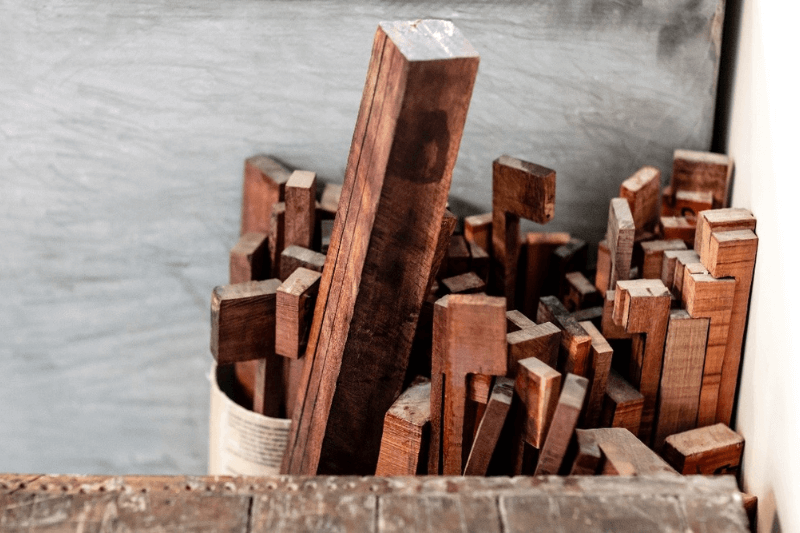
Pernambuco wood bows are highly prized in the world of classical music. This rare and precious wood has been sought after for more than 200 years for its exceptional acoustic and mechanical properties. Pernambuco offers an ideal balance of density and lightness, firmness and flexibility, speed and resonance.
These remarkable qualities enable performers to draw out the full potential of their instrument in terms of projection, responsiveness, and tonal color, meeting the highest demands of bowing technique and the interpretation of the great works of the classical repertoire.
Each piece of pernambuco imparts distinct tonal characteristics to a bow, depending on the musician and the instrument. Every handmade bow is a unique creation, a true work of art. Its craftsmanship requires expertise passed down exclusively from master to apprentice. A genuine “sound extractor” and the ultimate tool of expression, the bow is to the musician what the needle is to a turntable. It enriches musical performance and reaches straight to the heart of the audience.
True artists of wood, bow makers shape pernambuco with expertise refined over generations, creating genuine masterpieces. Each bow maker has a personal approach, a distinctive style, and closely guarded trade secrets that are reflected in their creations. These artisanal signatures are recognized by connoisseurs and professional musicians, who seek out these bows for their exceptional quality and inimitable sound.
This exceptional Brazilian wood has been protected since 2007 under the Convention on International Trade in Endangered Species of Wild Fauna and Flora (CITES). This restriction has fueled a troubling black market, and in an effort to curb exports, Brazil proposed transferring pernambuco from Appendix II to Appendix I of the Convention. The proposal was reviewed in November 2022 at the Conference of the Parties (COP27) and, although it was postponed, all indications suggest it will be adopted at a future COP. In the short term, such a change would effectively bring an end to the traditional practice of bow making. It could prove equally catastrophic for the music community, as musicians would no longer be able to travel across national borders with their bows.
As a natural material, pernambuco displays the full range of characteristics, strengths, and weaknesses inherent to wood. Quality can vary significantly from one piece to another, and the material may contain cracks, knots, checks, or internal stresses. Because a bow is exposed to various environmental factors, it can warp, lose its camber, or develop structural weaknesses if not properly used, maintained, and stored. Given these uncertainties and the growing challenges surrounding export, the manufacture of synthetic bows is becoming increasingly attractive to bow makers.
This is the case for Archèterie Morency. Its owner, Richard Morency, operates two workshops in Quebec dedicated to the making, restoration, and maintenance of bows. The bows he produces are entirely handcrafted with passion and precision, in keeping with the French bow-making tradition. The techniques he applies, both in crafting and restoration, were passed down to him through a four-year master-to-apprentice training. In turn, Richard shares his expertise and is actively involved with college-level students as Chair of the Board of Directors of the École nationale de lutherie de Québec. Today, faced with the challenges of sourcing pernambuco wood and the limitations inherent to this material, he has identified strong potential in developing high-end bows made from composite materials that combine various synthetic components.

“For several years now, I’ve been trying to imagine the bow of tomorrow. In many other fields, we see specialized, high-performance products that have been significantly optimized through the use of composite materials. Just think of hockey sticks or tennis rackets—no high-level athlete would want to go back to wood! I am convinced that very soon we will see composite bows on the market whose acoustic and mechanical qualities will surpass those of traditional pernambuco wood bows,” says Richard Morency.
Fiberglass bows have been manufactured since the 1960s. These bows are affordable and industrially produced. However, they are heavy, offer poor bounce, and provide a response inferior to pernambuco. Even today, fiberglass bows are mainly used by beginners.
It was in the 1990s that the first carbon-fiber bows were developed. Initially regarded as student bows, some manufacturers eventually succeeded in producing high-quality versions. Professional violinists often use them as a “second” bow, alongside their pernambuco bow, for rehearsals and outdoor concerts, as they are unaffected by environmental conditions. They are highly durable, readily available, and, in high-end versions, can offer a certain degree of flexibility. However, they are hollow and stiffer than traditional bows. As a result, musicians must compensate by applying greater pressure on the violin strings. This additional pressure requires sustained effort, which can become irritating over time and may lead to various long-term injuries.
In 2021, the Centre de développement des composites du Québec (CDCQ), one of the two College Centres for Technology Transfer (CCTT) affiliated with the Cégep de Saint-Jérôme, collaborated with Richard Morency to conduct an exploratory assessment of the mechanical and acoustic properties of various composite material combinations, with the goal of replicating pernambuco’s properties as closely as possible. Given the strong potential demonstrated by the initial results, a second project was submitted to evaluate different forming strategies.
Indeed, producing a high-end synthetic bow involves several significant challenges. From a manufacturing standpoint, two major aspects present difficulties: first, the stick is very small, curved, and tapered, making forming particularly complex. Second, the head must be integrated into the stick rather than simply assembled, adding another level of complexity. From the musician’s perspective, the physical and mechanical characteristics of the synthetic bow must closely match those of pernambuco, including stiffness, linear density, balance, and damping. Finally, a high-end bow is also a work of art, distinguished by its traditional style and carefully crafted artisanal appearance—qualities that must be preserved.

Richard Morency’s goal is to manufacture in Quebec a new high-end composite bow that combines the style and quality of pernambuco wood, while remaining independent from a declining supply source. Richard Morency has a strong desire to learn and works very closely with the CDCQ project team. The team is confident that the solutions currently being validated will successfully address the many challenges involved.
“I found an exceptional team at the CDCQ, fully committed to the project. The craft of bow making relies heavily on feel. You have to adapt to each piece of wood, and very often intuition is the only true guide. It’s quite a challenge! To me, the members of the CDCQ team are alchemists—magicians of materials. We have managed to bring together our scientific and artistic worlds. At the heart of this remarkable collaboration, this great adventure, there is, on both sides, the same passion, the same thirst for discovery, and a genuine joy in creating!” says Richard Morency.
By Marie-Claude Bélanger, Special Collaboration*
Marie-Claude Bélanger is a project engineer and Quality Manager at the Quebec Composite Development Centre (CDCQ) (mcbelang@cstj.qc.ca).
This article has not undergone thorough linguistic review. It may therefore contain some spelling and syntax errors. Rest assured that the nature of the content and information presented is not affected.

