
With increased investment in the defence sector, Quebec’s plastics and composite materials industry is facing a unique opportunity… but also a major challenge. Military contracts require not only higher production volumes, but also impeccable quality, complete traceability, and the ability to adapt quickly.
Many companies fear that adapting to this level of requirements inevitably involves complex and costly projects. However, experience shows that gradual, targeted, and affordable solutions already exist. Automation and advanced quality control—including machine vision in certain applications—provide powerful tools for meeting these new requirements.
Stricter Requirements in the Defence Sector
The growing use of plastics and composite materials in defence applications—including aerospace, armour, specialized vehicles, and structural components—reflects their lightweight properties and strength. However, their adoption comes with stricter requirements than in many other markets:
- Complete traceability of material batches and manufacturing parameters.
- Tight tolerances, where even the slightest defect can compromise safety.
- Tight deadlines driven by military programs or political cycles.
Without proper adaptation, these constraints can quickly create production bottlenecks and increase the risk of non-compliance.
Automation: Flexibility and Agility Above All
Automation does not necessarily mean transforming an entire plant. In many cases, targeted upgrades at critical workstations are enough to take a significant step forward. Examples include:
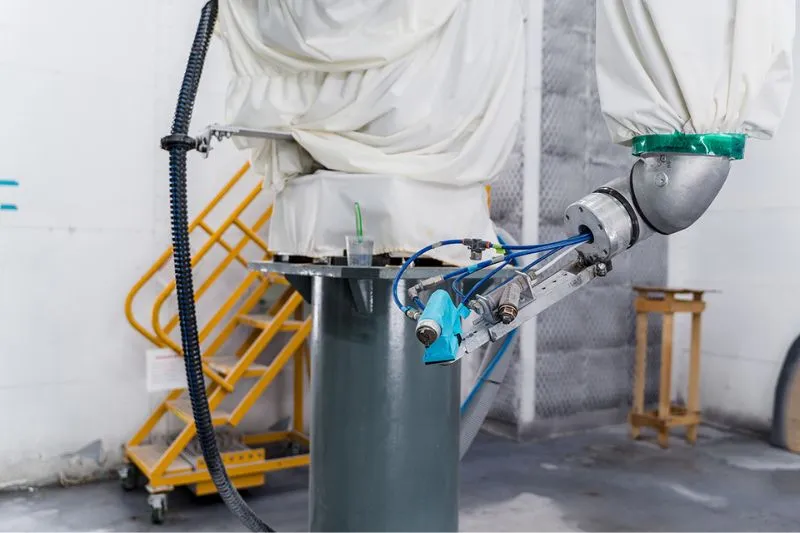
- Installing a spray robot to ensure consistent application of a composite material.
- Adding an automated handling system to reduce the physical demands on operators working with large parts.
These targeted solutions, integrated into an existing production line, can quickly improve quality, consistency, and production capacity. They also allow companies to test automation on a small scale before deploying it more broadly.
The Key Role of Machine Vision
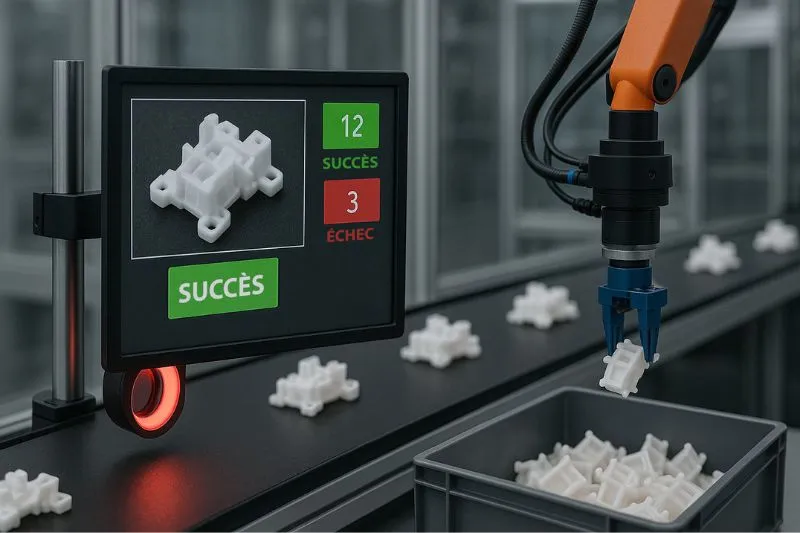
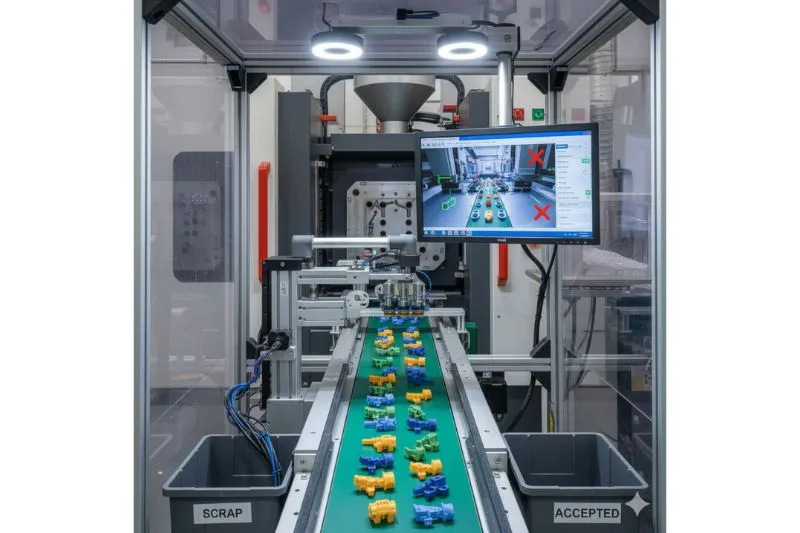
Machine vision is a good example of this gradual approach to integration. In simple terms, it gives machines an “eye” to see, measure, and interpret information in real time.
- Simple example: A camera that checks for the presence or absence of an insert in a plastic or composite part, or measures a critical dimension to within a few tenths of a millimetre.
- Intermediate example: Surface inspection to detect air bubbles, cracks, or contamination on a moulded part.
- Advanced high-speed example: Cameras capable of inspecting several hundred parts per minute with micrometre-level precision to ensure that each component meets specified tolerances.
When appropriate, these systems can not only detect and flag defects, but also automatically adjust certain production parameters. The result: consistent quality, less scrap, and digital traceability that meets military standards.
Different Types of Machine Vision Systems
Several types of machine vision systems are available, each suited to specific needs:
- 2D vision: Used to verify the presence of a component, read a barcode, check a colour, or accurately measure a dimension. Example: Ensuring that all holes in a moulded part are present and correctly positioned.
- 3D vision: Used to analyze complex shapes, volumes, or assemblies. Example: Verifying that components fit together correctly on an assembly line.
- Hyperspectral imaging: A more advanced technology that “sees” beyond the visible spectrum to detect defects that cannot be identified by the human eye, such as variations in material composition, contamination, or incorrect additive concentrations.
These technologies are not limited to large manufacturing plants. They are becoming increasingly accessible and affordable, sometimes even as simple modules that can be added to an existing production line.
External Support to Broaden the Perspective
An external perspective, whether from a specialized firm or an industry partner, can uncover opportunities that an internal team, focused on day-to-day operations, may not always identify.
- Suggestions for practical improvements.
- Recommendations for simple, quick-to-implement integrations.
- Identification of available funding and support programs.
This type of collaboration also reduces the burden on internal resources, which are often already stretched. When projects are carried out collaboratively, employees are more likely to take ownership of the solution, making adoption and long-term success significantly easier while supporting the overall change management process.
Financial Resources to Reduce Risk
Investing in automation or machine vision can seem daunting. However, many government programs offer financial assistance and tax credits to support this type of innovation. In some cases, companies may even be able to avoid any upfront costs before submitting a reimbursement claim under available funding programs.
This can significantly change the equation: a project initially perceived as costly can become much more accessible, particularly when implemented gradually and supported by these funding mechanisms.
Conclusion
Given the scale of defence-sector requirements, automation and advanced quality control can seem like a daunting challenge. However, real-world examples show that companies can move forward step by step, using accessible solutions supported by available funding.
As in other periods of crisis or high demand, success also depends on collaboration and knowledge sharing. Business leaders know that by supporting one another, building strong networks, and drawing on external expertise, they can overcome challenges more effectively.
Similarly, plastics and composites manufacturers that begin this gradual transition now—combining external perspectives, internal engagement, and expert support—will be better equipped to turn opportunities in the defence sector into long-term success.
By Alain Deslauriers, Special Contributor
Alain Deslauriers is co-owner of Lory Automation (adeslauriers@loryautomation.com).
This article has not undergone thorough linguistic review. It may therefore contain some spelling and syntax errors. Rest assured that the nature of the content and information presented is not affected.