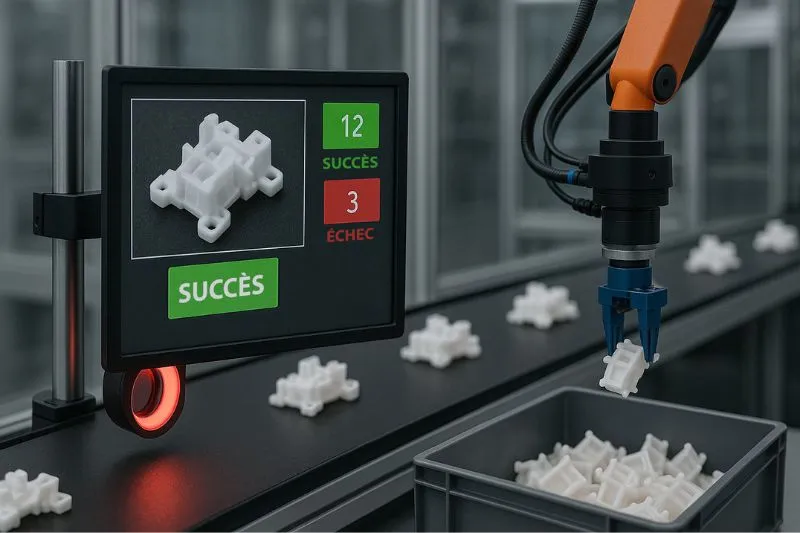
The circular economy for plastics is no longer a theoretical concept; it has become an economic and societal necessity. Yet, despite growing investment and a clear commitment to change, the proportion of plastics actually recycled remains low in Quebec.
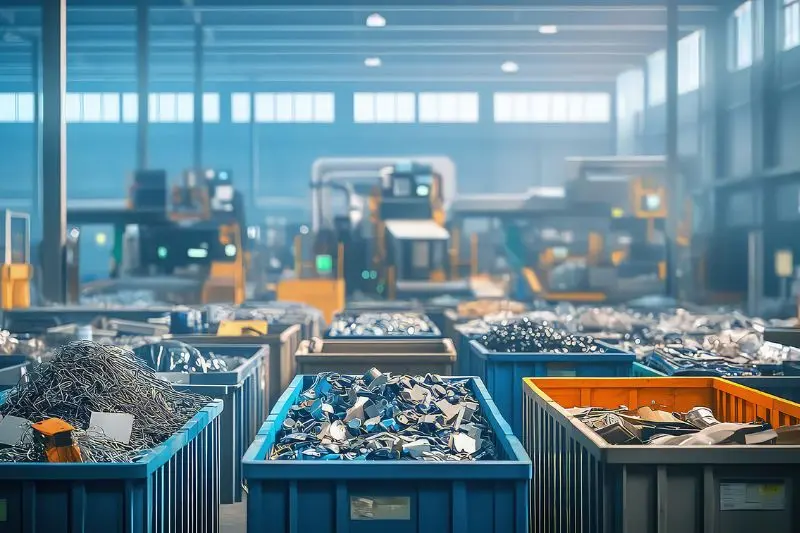
Recyc-Québec estimates that barely one-fifth of collected plastics are given a new life. In other words, the majority still ends up in landfill or is used for energy recovery. In this context, one question keeps coming up: how can circular innovation be turned into a viable business model—one that delivers not only environmental benefits, but also profitability?
Creating Value in a Circular Loop
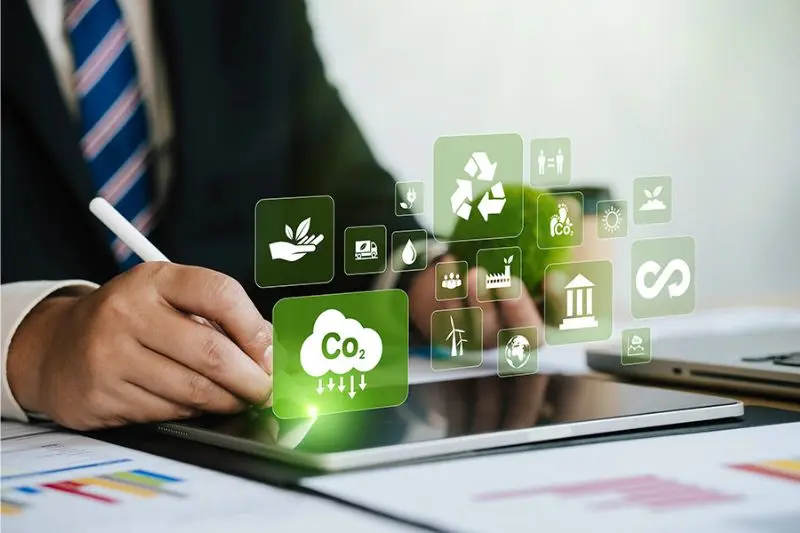
In the plastics industry, value goes beyond the price of a resin. It is built around everything that comes with the material: consistent quality, the ability to demonstrate compliance with standards, traceability of its origin, and even the assessment of its carbon footprint. When a manufacturer chooses a recycled resin, they are not simply looking for a cost-effective raw material; they are looking for a reliable solution that integrates seamlessly into their processes, strengthens their supply chain, and supports their ESG objectives.
In other words, capturing the full value of a circular loop is not about selling pellets to the highest bidder. It is about delivering a coherent combination of services, guarantees, and innovations. Together, these elements help ensure a finished product of equal or superior quality to one made from virgin resins. This integrated approach makes it possible to move beyond a commodity-based model and toward long-term partnerships.
Understanding and revisiting business models
Recycling is widely discussed, but the business models that underpin it receive far less attention. A business model, by definition, describes how an organization creates, delivers, and captures value.
One of the best-known tools, the Business Model Canvas (1), maps out this logic across nine building blocks, from the value proposition and revenue streams to key partners and customer segments. Going a step further, the Business Model Navigator (2) identifies sixty proven business models used across different industries and provides a framework for rethinking innovation through these patterns.
These business models are designed to create win-win situations with your customers and key partners.
Historically, plastics recyclers in Quebec and elsewhere in North America have operated according to a “trash-to-cash” model: purchasing bales of post-industrial or post-consumer plastics destined for disposal at low cost, processing them into pellets, and reselling them in direct competition with virgin resin. As long as oil and petrochemical product (polymer) prices remained high, this model could survive. But whenever oil prices fell, the market for recycled materials collapsed, exposing the vulnerability of this approach.
Business models can help reduce the risks faced by the parties involved in the recycling loop, ensure that operations are profitable for all stakeholders, and support the long-term viability of plastics recycling and recovery activities.
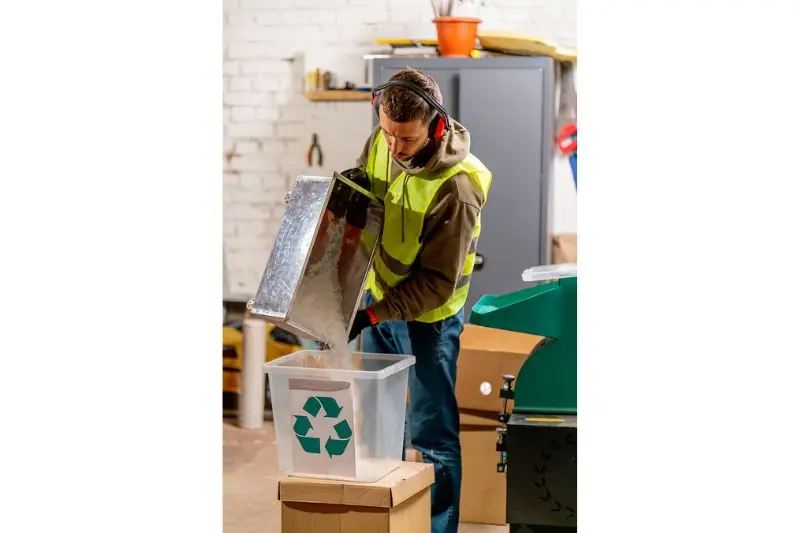
Three Quebec stories of circularity
Quebec is certainly not short of companies exploring alternative approaches. Three companies provide compelling examples of how circularity can become a strategic lever.
Cascades is the oldest and perhaps most iconic example. For more than 50 years, the company has built its reputation on recycling wood fibres, deinking newsprint, and integrating closed-loop systems into paper and cardboard production. Today, it is applying the same approach to plastic packaging, with the aim of offering customers products containing certified recycled content. Cascades goes beyond simply selling raw materials. It offers a complete cycle, from recovery to finished product, turning an environmental constraint into a competitive advantage.
Lavergne illustrates a more technical, innovation-driven model. Based in Montreal, the company gained recognition for developing, in partnership with Hewlett-Packard, a high-performance recycled plastic made from printer cartridges. This partnership reflects a fundamental shift: rather than remaining simply a supplier of pellets, Lavergne positions itself as a co-developer of solutions with its customers. The resin is no longer a commodity, but a custom-engineered material integrated into both a finished product and a brand strategy.
Loop Industries, finally, represents the most disruptive approach. Its PET and polyester depolymerization process makes it possible to produce recycled resin that is “infinitely recyclable,” with quality equivalent to virgin resin. Although the technology is still being deployed, Loop has already entered into agreements with multinational companies such as PepsiCo and L’Oréal. Here, the business model is based on technological differentiation and the sharing of costs and profits with customers.
These three paths demonstrate that there is no single way forward. Cascades focuses on vertical integration, Lavergne on co-innovation, and Loop on disruptive technology. Yet all three share the conviction that value is created when recycled material is no longer viewed as a second-tier substitute, but as a strategic choice.
In conclusion, solutions are needed to ensure the long-term profitability of stakeholders involved in recycling and reconditioning loops. In the face of fluctuating resin prices, part of the solution lies in exploring alternative business models: long-term contracts indexed to performance, industry cooperatives that pool risks, digital platforms that directly connect waste generators with processors, or performance-based models in which value is derived from use rather than from the material itself.
The challenge is no longer simply to recycle more, but to turn circularity into an economic lever. The companies that succeed will be those capable of moving beyond a commodity-based approach to offer truly integrated solutions.
By David Beaumier, Special Contributor
David Beaumier, P.Eng., M.A.Sc., is Director of Sustainable Development at the Society of Plastics Engineers (SPE) – Quebec Section (pl.david.beaumier@gmail.com).
This article has not undergone thorough linguistic review. It may therefore contain some spelling and syntax errors. Rest assured that the nature of the content and information presented is not affected.
(1) Osterwalder, A., Pigneur, Y. Business Model Generation, A Handbook for Visionnaries, Game Changer, and Challengers, John Wiley & Sons, 2010.
(2) Gassmann, O., Frankenberger, K., The Business Model Navigator, 3e édition, FT Publishing International, 2025.